

By using our website, you agree to the use of cookies as described in our Cookie Policy
Is Your Charlotte Siding Starting to Fade or Crack?
Most Charlotte homeowners think siding is just there to look good. Color, curb appeal, maybe a little texture. But your exterior cladding is pulling double duty every single day — shielding your home from rain, heat, wind, and everything the Carolinas throw at it. When that protection starts to break down, you're not just looking at cosmetic trouble. You're staring down structural risk, energy loss, and repair bills that pile up fast if you wait too long.
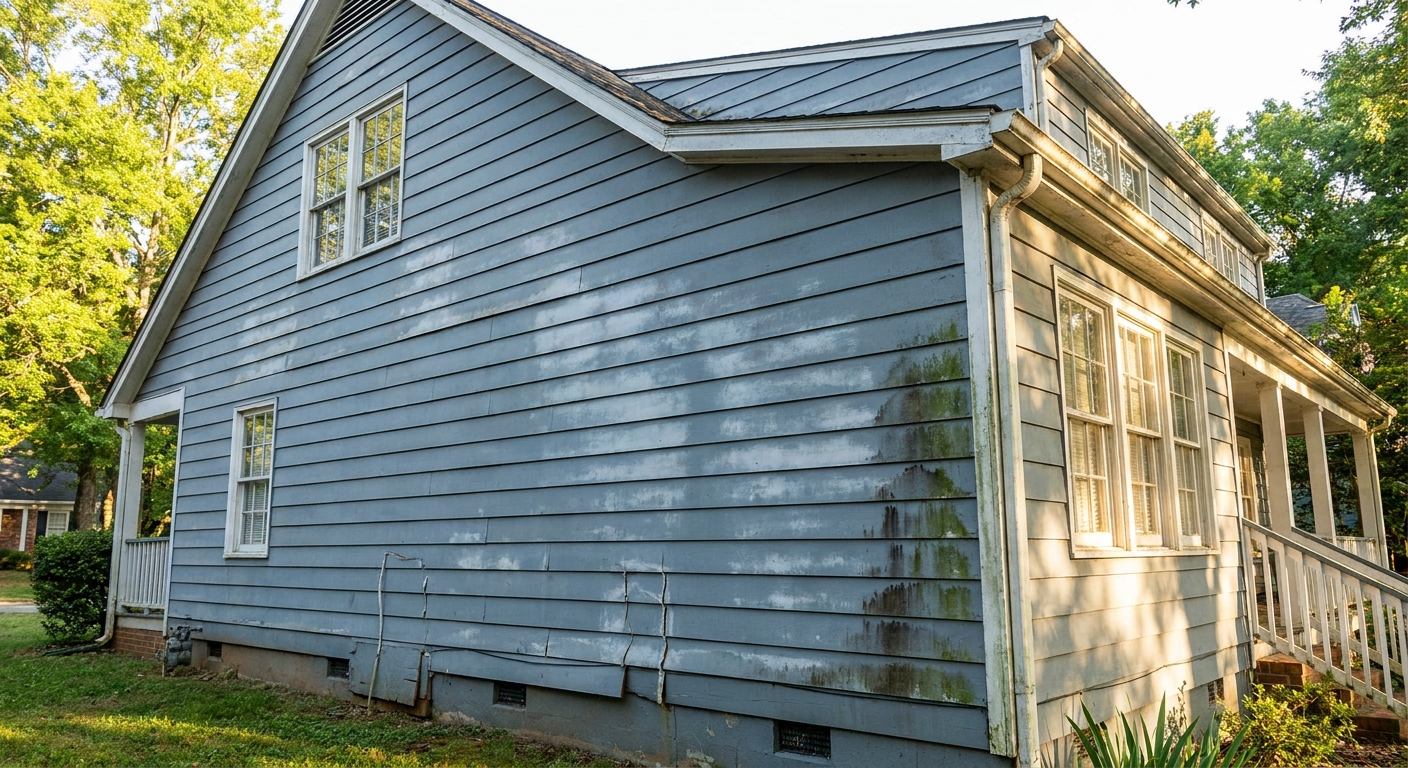
So here's what matters. If your siding is showing signs of wear, that's not a cosmetic hiccup — it's a warning. Every crack is a potential entry point. Every faded panel is a hint that UV damage has started eating away at your material. And every week you ignore it, the problem gets worse. The fix might be simple now, but it won't stay that way.
What Makes Siding Break Down
Charlotte's climate isn't easy on exteriors. We get blistering summers, humid stretches that never quit, and enough temperature swings to stress just about any material. Siding takes the brunt of it all, day after day, with no breaks. Over time, that exposure adds up — and certain factors accelerate the damage faster than others.
UV rays are the biggest culprit. South-facing walls catch the most sun, and that's where you'll see fading first. But it's not just about color loss. Prolonged exposure makes materials brittle, especially vinyl and wood composites. Then you've got moisture — rain that seeps behind panels, humidity that gets trapped in seams, and condensation that forms when temperatures drop. All of it works against your siding's integrity.
- Relentless sun exposure bleaches color and weakens polymer bonds in vinyl and composite materials
- Moisture infiltration from rain or humidity causes warping, rot, and mold growth behind panels
- Freeze-thaw cycles force expansion and contraction that crack rigid materials over time
- Poor ventilation traps heat and moisture, accelerating breakdown from the inside out
- Subpar installation leaves gaps, loose fasteners, and weak points that fail under stress
Why Waiting Makes It Worse
Faded siding looks bad. Cracked siding invites disaster. The difference between the two is how much damage is happening where you can't see it. Once cracks form, water finds its way in. Once water gets in, it rots sheathing, ruins insulation, and creates conditions for mold. What started as a surface issue becomes a full-blown exterior renovation problem — and the cost to fix it multiplies.
Beyond the hidden damage, compromised siding kills your home's efficiency. Gaps let conditioned air escape, which means your HVAC system works harder and your energy bills creep up. And if you're thinking about resale value, faded or damaged siding is one of the first things buyers notice. It signals deferred maintenance, which raises questions about what else has been ignored.
- Cracks allow water intrusion that damages insulation, framing, and interior walls
- Compromised panels reduce thermal performance and drive up heating and cooling costs
- Visible wear tanks curb appeal and makes your home harder to sell at full value
- Pest entry points open up when siding separates or warps away from the structure
Signs You Need to Pay Attention
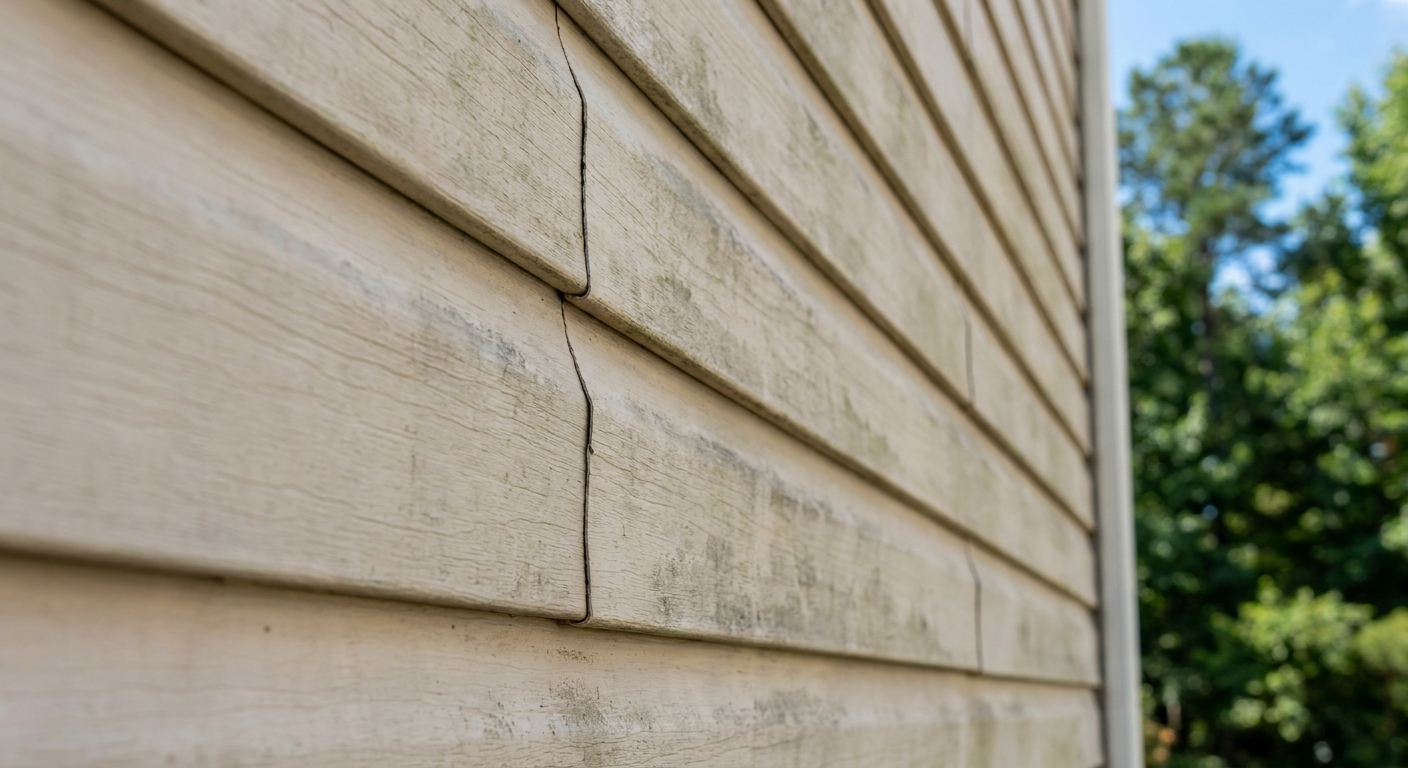
Sometimes damage is obvious — a big crack running vertically, or a panel that's buckled out of place. Other times, it's subtle. A slight color shift between shaded and exposed areas. A texture change that feels rougher than it used to. We've learned to walk the perimeter of a property at least twice a year, and we always find something new. The trick is catching it early, before small issues become expensive ones.
Look for uneven surfaces, gaps at the seams, and any spots where siding has pulled away from the house. Check for staining or streaks, which usually mean water is getting trapped somewhere it shouldn't. And if you see mold or mildew, that's a red flag that moisture has been sitting long enough to grow.
- Noticeable fading on sun-exposed walls compared to shaded sections
- Cracks, splits, or chips in individual panels or along seams
- Warping, bulging, or panels that no longer sit flush against the house
- Water stains, streaks, or discoloration that suggest moisture problems underneath
- Mold, mildew, or algae growth on siding surfaces or near joints
What You Can Fix Yourself and What You Can't
Minor surface issues are usually manageable if you catch them fast. Small cracks can be sealed with exterior-grade caulk. Fading that's really just dirt buildup comes off with a pressure washer and some patience. But once you're dealing with warped panels, extensive cracking, or water damage behind the siding, that's when you need to bring in someone who knows what they're doing.
We've seen too many homeowners try to patch major damage with quick fixes, only to watch the problem spread six months later. If you're not sure how deep the issue goes, get it inspected. A professional can pull back a panel, check the sheathing, and tell you whether you're looking at a repair or a replacement. Don't guess when the stakes are this high.
- Washing and light cleaning can restore appearance if fading is surface-level grime
- Caulking or patching small cracks works if the surrounding material is still sound
- Repainting can extend the life of certain siding types if the substrate is intact
- Professional inspection is critical when warping, moisture, or widespread cracking is present
- Partial or full replacement becomes necessary when structural integrity is compromised
Materials That Hold Up Better in Charlotte
If you're facing a replacement, material choice matters more than most people realize. Vinyl is cheap and low-maintenance, but it fades faster than alternatives and cracks under impact. Fiber cement costs more upfront but resists UV damage, moisture, and pests better than almost anything else. Engineered wood looks great and performs well if it's properly sealed and maintained. The right choice depends on your budget, your home's style, and how much upkeep you're willing to do.
We always recommend products with built-in UV inhibitors and long warranties on color retention. If a manufacturer won't stand behind their product's appearance for at least ten years, that's a red flag. And no matter what material you choose, proper installation is non-negotiable. Poorly fastened siding fails faster, regardless of how premium the material is.
Stop Letting Damage Compound
Your siding isn't decorative trim. It's a system that keeps your home safe, dry, and efficient. When that system starts to fail, the damage doesn't pause while you think it over. Water keeps getting in. UV keeps breaking down materials. And every season that passes makes the eventual fix more expensive. If you've noticed fading or cracking, get it checked now — not next year, not after you see how it looks in spring. Right now, while the fix is still manageable and the cost is still reasonable. Charlotte homeowners often upgrade their siding before winter to avoid further deterioration. Understanding what to expect during an exterior renovation can help you plan effectively. For comprehensive exterior services, we're here to help. Contact us today to request a quote and protect your home.
Ready to Protect Your Home?
We know how important it is to keep your home looking sharp and standing strong against Charlotte’s unpredictable weather. If you’re seeing signs of siding trouble, let’s tackle it together before it turns into a bigger headache. Give us a call at 980-704-7740 or request a quote today so we can help you restore your home’s curb appeal and peace of mind.
‹ Back